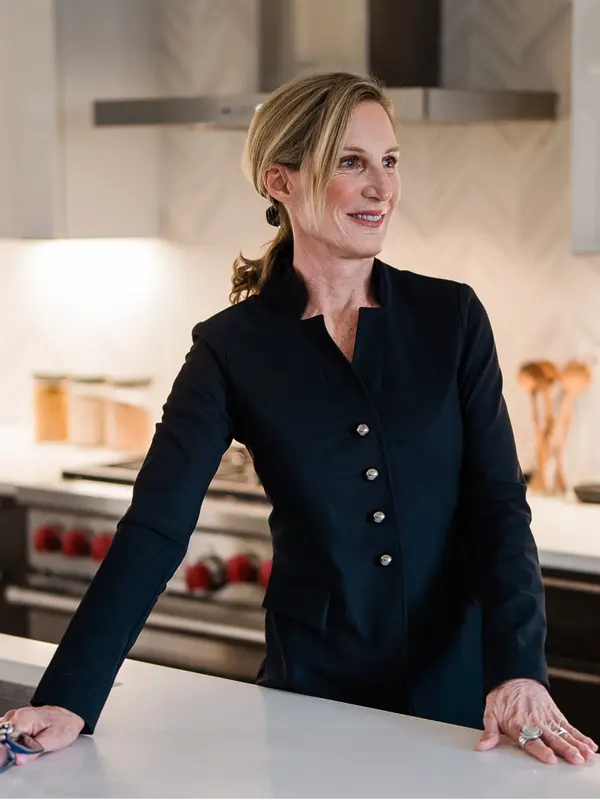

Joan Fleischmann Tobin is Part of Naples History

Joan Fleischmann Tobin is not willing to use her age as an excuse to slow down or take it easy. She has places to go, people to see, businesses to run, and a good life to continue living.
That life began in Canada in 1943. Joan was born an heir to Fleischmann’s Yeast, America’s oldest baker’s yeast brand, which her great grandfather founded in Cincinnati, Ohio, in 1868, after discovering how to preserve the product. Joan is the third and youngest child of Julius Fleischmann Jr. (known as “Junkie”) and his wife, Dorette Kruse Fleischmann. Julius Fleischmann Sr. passed away when Junkie was just 25, leaving him to oversee the company’s decision to become part of Standard Brands, the first food conglomerate taken public by J.P. Morgan & Co. in the late 1920s. During World War II, Junkie served as a U.S. Navy lieutenant commander, first with the U.S. Embassy in Canada and later overseas as a naval attaché.
The family’s main residence was Winding Creek Farm, an estate located outside of Cincinnati, where Joan lived until she departed for boarding school. The Fleischmanns also kept an apartment in New York, a house in Cape Cod, and a boat berthed in a variety of places. They traveled internationally, too, across Europe and other locations.

Joan first visited Southwest Florida at age 3, arriving via train with her parents for a vacation at the Naples Hotel. She recalls the iron bed stands, as well as being told by her mother to stay away from the bushes, where snakes slithered. On another early visit, Joan’s family leased Coquina Cottage at 1170 Gordon Drive, where she recalls being taught to finger paint by Broadway star Gertrude Lawrence, who—along with her husband, Richard Aldrich, and others—was introduced to Naples by Junkie and Dorette.
So impressed with the town where he did not have to don a sport coat to enjoy good food and a good time, Junkie began buying buildings and property and inviting like-minded friends from international destinations to his newfound paradise. His first commercial purchase, which began his interest in Third Street South, was the Mercantile Building (built in 1919 and the site of the first telegraph office). Junkie and Dorette transformed the building that once sold food and general merchandise into the Antique Attic, filling it with items they encountered on their world travels. (For more than 25 years, the building has been home to Campiello Ristorante & Bar.) The pair continued to acquire or build on Third Street South, bringing top interior designers and shops to the area.
Junkie also bought more than 300 acres of land (mostly between U.S. 41 and Bear’s Paw Country Club, abutting what is now Golden Gate Parkway), including where Fleischmann and Freedom parks now rest. On 50 acres of this land, Junkie created Caribbean Gardens, an ecotourist destination before the term was coined. Today, this is Naples Zoo at Caribbean Gardens.

A Girl’s Life
At age 15, per family tradition, Joan left home for boarding school. She attended St. Timothy’s, an all-girls school in Maryland. Here, she learned to get along with others since she was often the only child at home. Joan, who admits she was an unruly handful, says her behavior needed some guidance. She expounds, “I was spoiled.”
After graduating, Joan attended Vassar College, a private liberal arts college in New York. She credits her strong foundation at St. Timothy’s for underpinning her studies during her first two years at Vassar, after which she left.
As Junkie’s health declined, Joan returned to Cincinnati. Here, she enrolled at the University of Cincinnati, finishing a degree in political science and history. Joan embraced and enjoyed her life. She fondly references the influence of her father, whom she notes was a complete gentleman—not dictatorial but with high expectations relative to character and behavior. “He was a very wise man,” she says. “He was an insightful presence in my life.”

Life is often about whom you know, and Joan knew people. In 1968, she learned about a job with the Nelson Rockefeller presidential campaign. Because she understood she lacked certain skills, she spent the first few days hiding in a closet learning how to operate an electric typewriter. “Failure was not an option,” she says. “You made it happen.” She worked in New York City for the remainder of the campaign.
Joan’s next adventure took her to a small town near Pitlochry, Scotland, where she was part owner of a small country hotel. “The mind makes what is available important,” she says. When she realized the highlight of her day was serving a pint to the postmaster and listening to local gossip, she decided she wanted more from life.
Because of a successful rally she had planned in Cincinnati for Rockefeller, Joan was tapped as assistant to the campaign manager for Robert Taft Jr., the grandson of President William Howard Taft, who was running for U.S. Senate (representing Ohio) in 1970. She took it on. Taft won.

Washington, D.C., became Joan’s official home. It remains so today and is a place she has come to love—one filled with friends for whom she has great regard. It was also where she met Maurice Tobin. Per the suggestion of a friend who knew both, Joan accepted a lunch date with Maurice that lasted a few hours and resulted in a marriage of 42 years.
Joan recalls it was an exciting time to live in Washington, coinciding with the feminist movement of the 1970s. “Women took the opportunity to become actively involved in [their] rights; I jumped in,” she says. With few women in politics and government at the time, Joan launched a volunteer executive talent search group, providing in-depth biographical data on hundreds of women candidates for cabinet-level and assistant cabinet–level jobs (to be filled by the incoming Carter administration).
Joan was tapped to serve on the board of directors of COMSAT, an international satellite company, and as the U.S. representative to Intelsat, which expanded satellite communications throughout the world. Additionally, she served on the board of Plains Resources, an oil, exploration, and pipeline company then based in Houston. She even engaged in some venture capital activity.

Joan was also a silent partner for 25 years in Mark Hampton, Inc., an international interior design business. Hampton, an iconic American designer, worked on the Blair House, the official guest house of the U.S. president. Joan has served on the Blair House’s foundation since its inception in the mid-1980s.
In 1983, she started a magazine called Washington Woman. While the magazine, which provided a mix of business, news, and cultural articles for professional women, had a short life (only four years), it was, according to Joan, “well worth the effort.”
Present for the Future
After Junkie’s death in 1968, the family continued their interests in Naples real estate. When her mother died in 1994, Joan took over Neapolitan Enterprises. Just as her parents had, she committed herself to creating beautiful communal areas—spaces where kids and canines are always welcome.

Joan is a dog lover. She has owned a variety of breeds over the years and added several antique canine statues to Third Street South. It was during her volunteer work on the construction of the Naples Dog Park at Baker Park when she met Matthew Kragh, founder of MHK Architecture in Naples, some 16 years ago. “I met with her to discuss the park,” says Kragh, who was also volunteering on the project. “She despised me, as I worked for the competition.”
Over lunch, however, the two had a lovely conversation, according to Kragh. “At the end, she hugged me and told me I was her architect now.” Since then, Joan has entrusted Kragh to protect the beauty of Third Street South. “I take a global perspective of the street,” Kragh says. “Every little thing becomes a project.”
These days, with her children—the next generation—Joan is keeping the Fleischmann legacy alive in a paradisical town that attracts a jet-set crowd who enjoy living the good life just as Joan does.
Story Credits:
Shot on location on Third Street South, Naples
The post Joan Fleischmann Tobin is Part of Naples History appeared first on Naples Illustrated.
Categories
Recent Posts







GET MORE INFORMATION